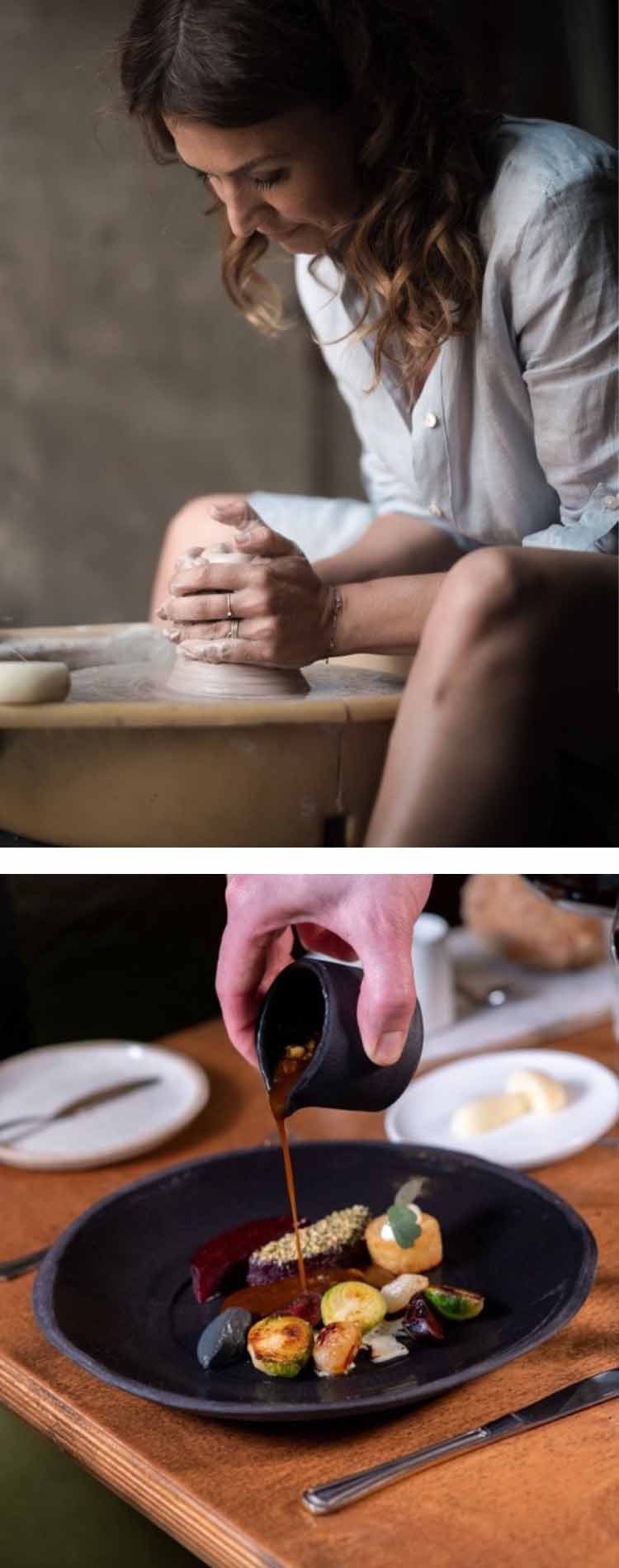
There is chemistry between chefs and ceramists

photo credits: Wim Demessemaekers
For a chef who wants guests to feel they are "in the forest, on the coast, in the farmyard," natural looking plates and slightly imperfect compositions seem a no-brainer. In our visits we see more and more chefs commission custom ceramics to extend their "story" onto the table: the clay body, glaze, and form are chosen to echo the terroir, architecture, or brand identity. Is it a hype, or clever chemistry to enhance the fine dining experience?
Custom ceramic plate manufacturing is costly and signals investment and seriousness to diners who sense they are in a "special" environment. It is a statement against Instagram perfection—a shift away from "sterile precision" toward imperfect, tactile presentations that feel more honest and less curated. But there is more, some chefs claim that food presented on heavy plates is perceived as more expensive and exclusive. Is that true? And if so, what else can the plate or bowl add to the culinary experience? Time to do a fact check -hence the footnotes in this article- and learn more about creative collaboration between chefs and ceramists.
Choice of plate is as fundamental to high-quality dishes as the choice of a grower
A trailblazer in food sensory research is Prof. Charles Spence, author of Gastrophysics: The New Science of Eating (2015)[1]. He proves that plate design, shape, form, and weight measurably change how guests perceive flavor, quality, and even portion size in fine dining[2]. An example: a warm, savory seafood dish on a thin, light plastic plate gets lower ratings of flavor intensity and overall satisfaction than if the identical dish were served on a thick, warm, light earthenware plate of similar size but greater weight.
Research facts about plate and tableware effects on food perception:
- White enhances sweetness and flavor: identical strawberry mousse was rated approximately 10% sweeter and 15% more flavorful on a white plate versus a black one[3].
- Red plates can reduce intake of snack foods, likely because red functions as a danger/stop cue[4]. This effect has been observed across multiple studies examining portion size and dietary choices.
- Dark food on a light plate (or vice versa) improves perceived intensity and definition of flavors, while low contrast can make dishes seem flatter[5]. This color-contrast principle has become a fundamental consideration in fine dining plating.
- Angular plating or plate shapes enhance bitterness and sharpness and rounder forms tend to be associated with sweetness and smoothness[6]. This shape-flavor association reflects deeper psychophysical relationships between visual geometry and taste perception.
- Meals with regular ceramic, glass, or metal tableware are rated higher in flavor, saltiness, and acceptability compared to wooden and plastic sets, especially when warm[7]. The material composition of tableware significantly influences the dining experience.
- Heavier plates and cutlery add a sense of luxury and "value". They consistently increase perceived quality and enjoyment of the same food[8]. This weight-premium relationship has been demonstrated across diverse food types and dining contexts.
- Feel, temperature, and sound of earthenware ceramics contribute to a calmer, more refined atmosphere and food offering. This is influenced by the heft in the hand, heat retention, and muted clatter, compared to the much harder fine porcelain. The risk, as Spence and colleagues note, is that if the composition looks too crowded or visually unstable, guests read it as messy or less elegant, which can lower hedonic ratings even if flavors are identical[2].
Collaborating with a ceramist feels natural to restaurant Flores (4R) in Nijmegen, Netherlands. As natural as maintaining a close working relationship with the local food forest. Owner Elroy Slijkhuis is always scavenging for distinctive plates and glasses: "The orange and dark brown Scandinavian sets -like Arabia or Rosti- from the seventies set our style of cooking apart and underline our philosophy of working in a sustainable manner. Second-hand thrift shops are treasure troves of unexpected beauty. They are cheap and unique. The only disadvantage is that you cannot replace these plates when broken or chipped. They are truly one-of-a-kind."
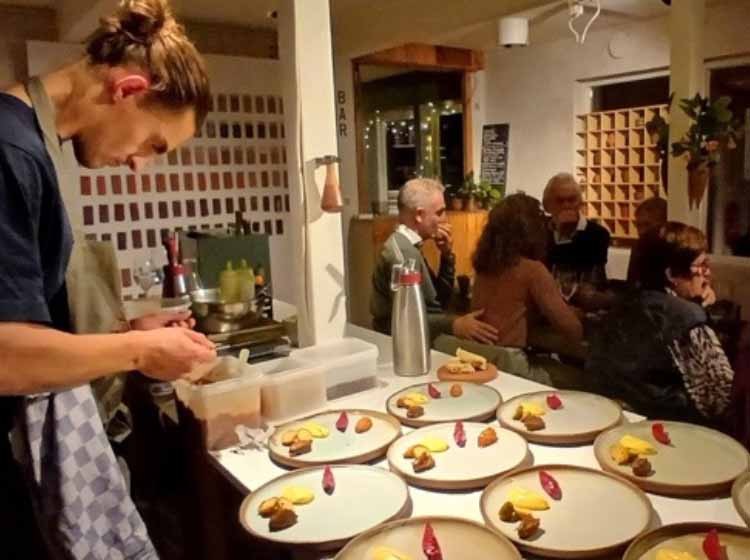
The chef, Luuk Freriks, believes that the visual aspect of a plate guides the diner's first impression. It also dictates his plating. "Our second course is always a 'spoon dish.' I like this to be in a bowl so you can use the edges to push the food onto the spoon. The shape works beautifully with light and foamy sauces; they sit nicely on the bottom." For consistency, Flores collaborates with Kleimegen, a small-scale workshop. Mother and daughter create earthenware with clay from the Nijmegen riverbank: "Their beautiful plates are expensive, and sometimes I wonder why we bother. But the pink clay from 10 kilometers away really adds to our storytelling and the visualization of the dishes. The bright greens of early spring jump almost off the plate."
Slijkhuis explains the dilemma: "We have eighty covers in an evening, and most people choose the menu. So we need some type of consistency. This is why we also collaborate with Bird Tsang. They create custom tableware 'for daring chefs' and can handle larger volumes, so we get the quantities we need." As a contrast, last November, Flores collaborated with art collective Fabrikaat. They created unique tableware for one-off exclusive dinner with twenty guests. Spoons were made of mussel shells; plates pressed from organic leftovers or broken glasses. A full interactive dinner in the garden of the atelier, pushing the boundaries of regenerative ceramics. Slijkhuis concludes: "It was fabulous—an opportunity to approach our day-to-day routines differently and ask existential questions. This is an investment in ourselves. We lost some money - even at the price of 200 euros per cover- but gained a lot of new inspiration."
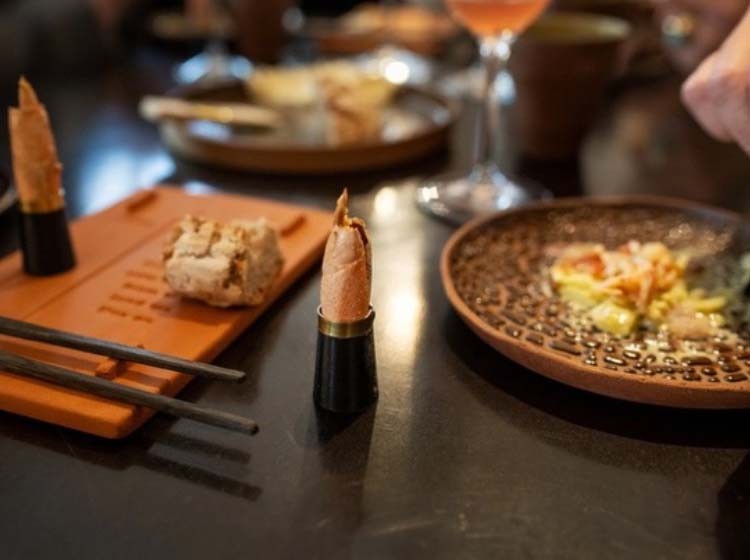
"I love working with chefs who have a clear vision; this allows us to work in a free manner," says ceramist Ilse De Vis of Wild Moon. In her Antwerp workshop, she co-creates plates and bowls with chefs. "We work in a very intuitive manner, starting with the impression and function the chef is looking for. Quite often, we return to the first prototype after a couple of rounds of creation. The one made without complicating and overthinking is the one that sticks." Ilse only works with the natural colors of clay: black, white, brown, and beige. Her self-developed glaze brings the various tints to life. "Wild Moon represents earth and mystery—the dualities we all embody. The power of the moon, high in the sky and attracting water, has always fascinated me. Ceramics brings all four forces of nature together: earth and water to create clay, air to dry the ceramic, and fire to bake them. It is a true product of Mother Earth.
Wild Moon started with off-the-shelf collections, Ilse De Vis is now moving increasingly toward custom work: "Like Folia, a restaurant in Antwerp—the chef wanted a small barrier in the bowl for the sauce, so we created a tiny ring. He chose full black, a color not many chefs use. I notice that chefs change plates with each menu change and work with multiple suppliers and artists. Chefs who use my creations are typically working more with the seasons and irregularities of nature. They embrace imperfection and like my wild style. The more classical style with points, dots, and tiny sprigs does not work on my plates. It really supports Nature-driven Nordic, terroir-centric, or open-fire concepts. It is a strategic differentiation in a crowded field; plate language has become a branding lever."
She expects chefs to understand the effects of the plate on the perception of their cuisine. "They choose my collection and colors; I help shape the designs. Sometimes they really surprise me, like the chef who is now serving appetizers in what I thought were espresso cups. It is a true 'intuitive interaction' between my artistic interpretation and the chef's vision."
Text: Sheila Struyck – facts collected with AI