
Lovage, a Herb Full of Magic
Lovage (Levisticum officinale), also known as maggi herb or French celery, is a perennial plant and—like garden angelica—belongs to the carrot family (Apiaceae). The exact origin of the plant is unknown, but it naturally thrives in a Mediterranean climate and is found growing wild in countries around the Mediterranean Sea and in the Middle East.
Appearance & cultivation
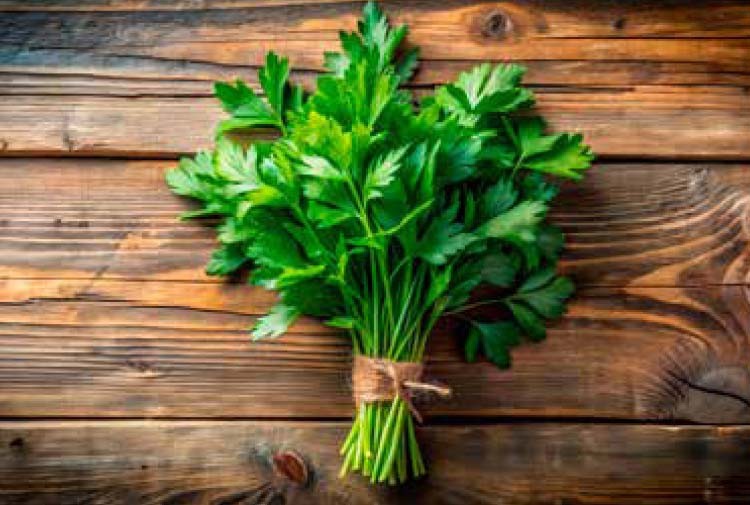
Lovage is a large green plant with branched hollow stems, bright green deeply cut leaves and small yellow flowers that grow in umbels. Lovage can be propagated by seed and is harvested in the autumn of the second year. It is primarily cultivated for its leaves, although essential oil is also extracted from the seeds and the root. Despite its origin in a milder climate, the plant is frost-hardy.
Lovage is considered a so-called forgotten vegetable. It is cultivated on a limited scale in Europe, mainly in Italy, Germany, Austria, Switzerland and France. A small number of growers are also active in Belgium and the Netherlands, working with limited cultivation areas. As with angelica, the flowers strongly attract honeybees.
Historical use
Lovage was already cherished in Roman times, when it was an indispensable ingredient in classical cuisine. It is even one of the most frequently mentioned herbs in Apicius, the oldest surviving Roman cookbook. Through the Roman legions, its culinary use spread northwards, eventually reaching our regions.
During World War I and World War II, the herb was often used as a salt substitute. However, lovage is more than culinary heritage. In the Middle Ages, the plant was praised as an aphrodisiac, used in love potions and applied to treat a variety of ailments such as stomach pain. Its name subtly refers to this reputation, through terms such as “loveache” or “love parsley”.
Active compounds and contemporary applications
The spicy aroma of lovage is due to the presence of phthalides and smaller amounts of terpenes and coumarins in the leaves. These compounds give lovage its intense herbal scent, reminiscent of citrus and anise, and contribute to its pronounced umami flavour. Lovage also produces a mild tingling sensation in the mouth due to the presence of ligustilide, a volatile phthalide.
Because of this aroma, the herb earned the nickname “maggi herb”, a playful reference to the well-known bouillon—despite the fact that lovage is not actually part of that recipe. Lovage is extremely versatile in the kitchen. The leaves are ideal for use in pesto, soups and salads, while the seeds pair perfectly with pickles or dressings. Even the juice can be frozen and used as a flavour enhancer for mocktails and cocktails. Did you know that a true Bloody Mary traditionally calls for a lovage stalk rather than celery?
According to European legislation, the leaves and the schizocarp—the fruit that contains the seeds—may be used in food products. All other plant parts, such as the root, may only be used in food supplements, as is also the case for the essential oil.



