How to go ‘dairy free’ with confidence
Three professionals offer expert advice
As Steven Klein Nijenhuis of Herberg onder de Linden (Nl) said in our recent profile: It is quite scary to stop using diary, because you were trained as a chef working with them. For him this meant having to reimagine his sauces and creams, which was quite a journey. Is that time investment necessary or can you simply use so-called dairy-alternatives like plant-based creams, milks and butters? We asked professionals who have ‘been there and done it’; Frank Fol – founder of We’re Smart World and one of the first owners of a fine dining ‘vegetable restaurant in Belgium, Richard Leidekker – Executive chef at Flora Food Group and Jan Majoor’ head of R&D at De Nieuwe Winkel Lab.
Chefs can change their belief that a sauce needs to contain cream – Frank Fol – founder of We’re Smart
Frank Fol: “I visit quite some restaurant for the We’re Smart Green guide. On these visits I meet chefs who claim that it is impossible to create delicious sauces and preparations without cream and butter. And they ask me for advice. Especially those chefs that have been trained in the classic French way seem to rely on both the flavour and the properties of the ‘original’. The fact that is has been so engrained in their training means that it takes quite some knowledge and conviction to change these habits, especially in the pressure of large kitchens. Pressure from cost perspective but also staff wise. There is no time to experiment or use expensive alternative ingredients.”
It is also personal quest for Fol. Besides leading the vision for delicious dishes that celebrate vegetables and fruits, as a person with lactose intolerance he has been served with many ‘solutions’ for his dietary requirements. “I want chefs to reconsider: do they really need to use cream? Often creams (plant or animal based) mask flavours instead of enhancing them. When creating a dish that is cantered around vegetables you could think differently and use the cooking liquids or pureed vegetables to create flavour.” Fol understands the implications for large professional kitchen. Cream and milk are often used to bulk things up, to create volume. Like a bechamel. “That still has the image of a ‘proper’ sauce and is therefore used, but does it really offer refinement? “
Fol offers an example to inspire your thinking: grill a beautiful steak of fennel. For the sauce deglaze the pan with a broth of (the trimmings of the) fennel, reduce this and enhance the flavours with fresh dill. A different type of ‘glace’ to elevate your dish!
“A sauce does not need cream to be refined”
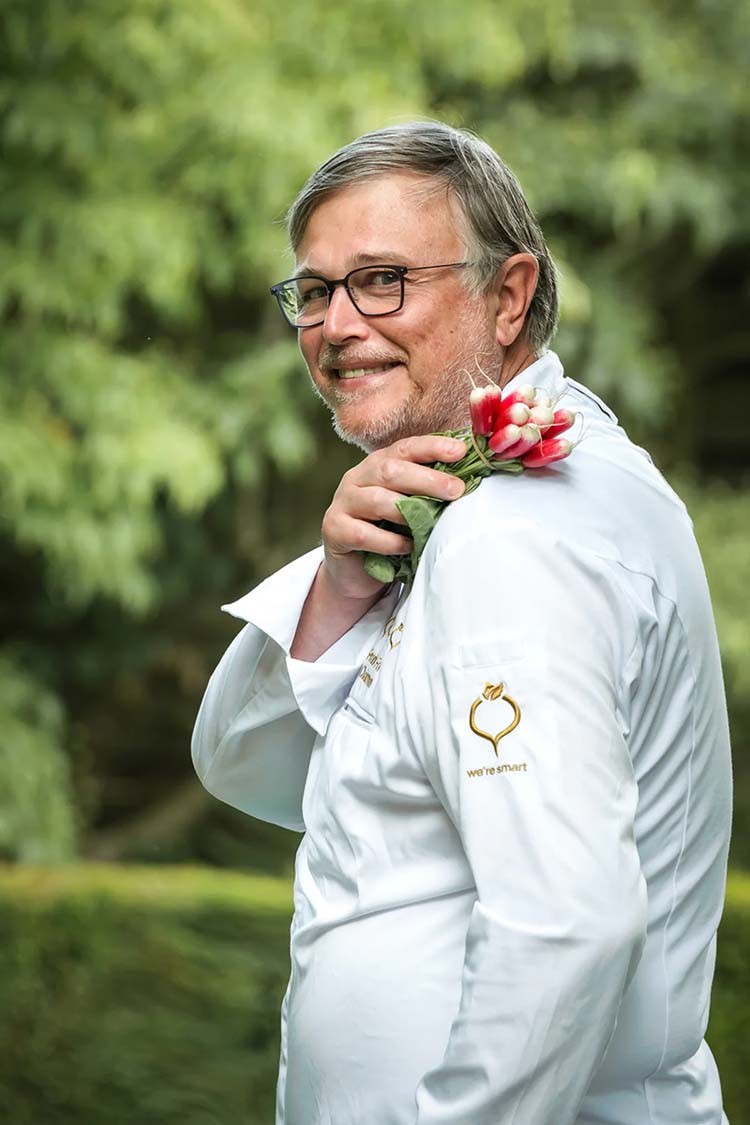
“No need to change your routines and habits” – Richard Leidekker – Lead chef @ Flora Food Group
Richard Leidekker is convinced: “A skill takes 10.000 hours of practise before you master it. And we work in an evolving environment. Like the new Dutch Cuisine with its 80/20 (plant/animal) principles. Yet, creating as much impact with a dish centred around grilled carrot as a dish with grilled langoustine takes a skilled professional. Supporting these craftsmen to create new techniques and flavours is my pride and driving force.” Leidekker worked as sous Chef at Restaurant de Engel and Executive Chef at Restaurant Artusi Delft before joining Unilever as Innovation chef in 2006. He now is Executive chef at Flora Food Group.
“Flora offers so-called ‘one on one’ cream and butter replacements. I work with R&D on a daily basis. Our Culinary Academy is in the middle of the food valley in Wageningen, at the campus of one of the leading Food Universities. Here we create new products and invite large customers to collaborate on their recipes and menu’s.”
“No need to be scared”, says Leidekker. “There is really no need to change your culinary routines. Our creams have all the properties of dairy. We always work on the functional benefits but are very mindful that taste always comes first. Sometimes we surpass the original. The cream can’t overwhip or split when making a white wine sauce. It also offers better binding and coating properties.”
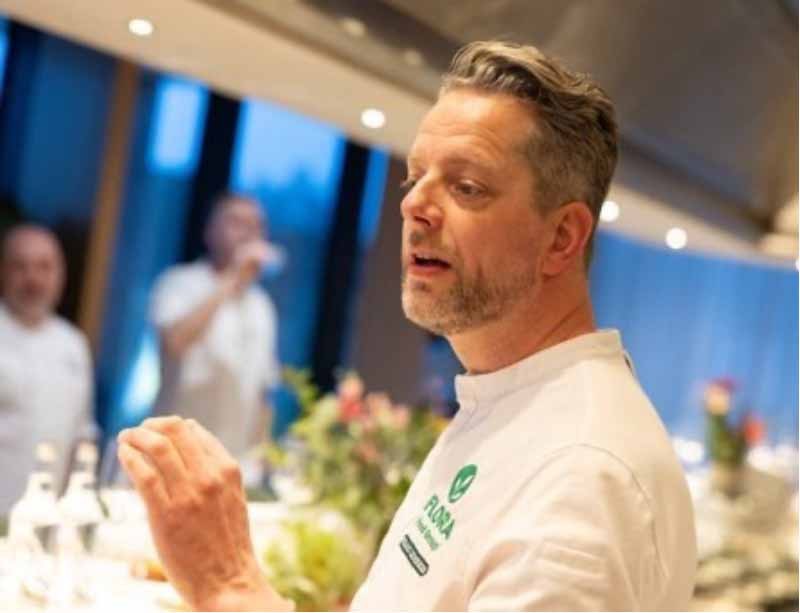
Leidekker does not see the world in terms of vegan, plant forward of Pure Plant. “We offer a simplification of your mise en place, we offer choice. Replacing dairy in all your preparations – like the pepper sauce for a steak or roux for a bechamel, solves many dietary restrictions. A benefit in a time where it is hard to find skilled personnel and there is an increase in allergies, intolerances and dietary preferences.”
If you want to serve a dairy free dessert, Leidekker shares his recipe for plant-based ice cream: “Bring 500 gr. Flora Plant Cream 31%, 350 gr. water, 250 gr. sugar, 1 pod vanilla (or any other flavour you want to infuse) and 0,5 piece lemon zest to boil. Mix in 2 gr. xanthan with a hand-blender. Allow to cool. Freeze in an icemaker. Really dead-easy, no need to make a crème anglaise! You can play with the flavours; I recently made a very fragrant clove-ice cream.”
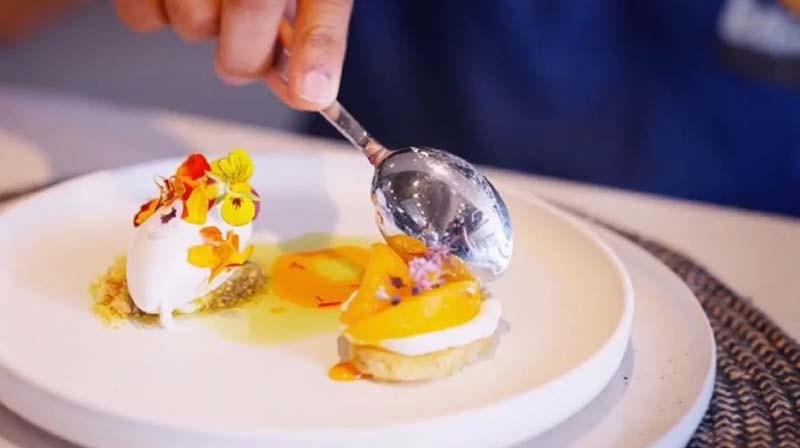
“This will reduce the complexity in your kitchen caused by dietary restrictions”
By separating flavour and function you can create something that does not yet exist – Jan Majoor – Head R&D @ De Nieuwe Winkel Lab.
Jan Majoor works at De Nieuwe Winkel in Nijmegen. This is a 100% Pure Plant restaurant with the highest acknowledgment of five radishes. He leads the innovation efforts for the future dishes of this top fine dining restaurant. "Of course, you can prepare a recipe you know well with a ‘replacement product’. If you know what it has to taste like and how you make it: you can make a beurre blanc with a good plant-based butter. But I like to go further. That means looking at your desired end-product and the attributes or parameters you need for the dish. First separate mentally the desired texture (like firm, crunchy, creamy) from the taste you want to achieve. That could lead to choosing different ingredients to achieve a familiar recipe. A butter sauce is basically a warm emulsion with saturated fats, which we can fully reimagine in house. But obviously we have the luxury of an R&D team, which not everyone has."
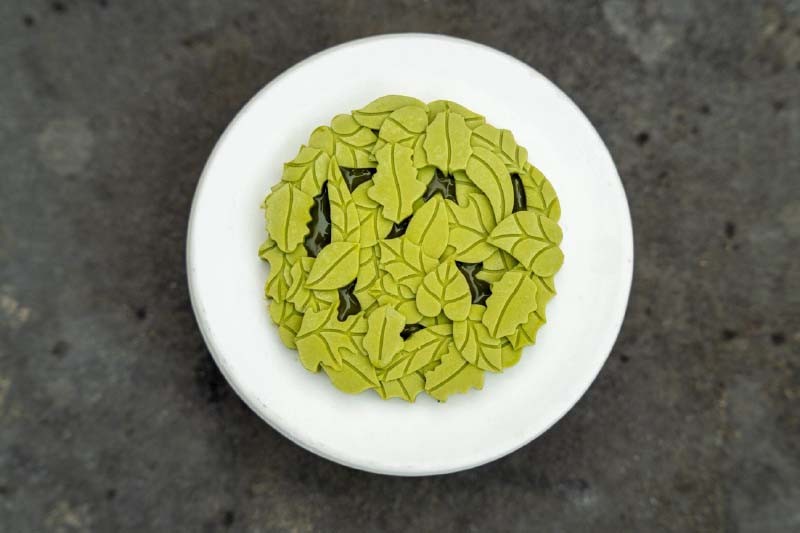
When asked what a chef in a ‘normal’ restaurant could try Majoor is clear: “You have to alter your train of thought. Either play with the status quo or create a new type of sauce that does not exist at all. Like in our menu: a plant-based butter sauce, with a gastrique of fermented okara and sunflower butter we produce ourselves with bacterial aroma’s that resemble the flavour and aroma of butter. And in another dish a vinaigrette that resembles a broth, with yeast, juice of kohlrabi and a koji. One highly recognisable, the other a new dimension.
I would start with asparagus. You can blanch them. Raw or pickled is also an option. If you want to add a creamy consistency, make a roux with broth asparagus jus, dried seaweeds or wine. And use sunflower oil instead of butter, because you only need to ‘cook’ the flour for the roux. A fun start is fresh yeast. Grilled in the oven, this gives immediate depth and strength to a sauce. Using umami can provide you the depth in sauces you sometimes miss when working without dairy.”
“It is fun to create something that does not yet exist”
Article by Sheila Struyck