
Angelica, the Precious Herb of the Vikings
Garden angelica (Angelica archangelica), also known as archangelica, wild celery or simply “angelica”, is a perennial plant belonging to the carrot family (Apiaceae) and is related to lovage. This aromatic plant originates from Northern Europe and thrives best in cooler climates.
Appearance & cultivation
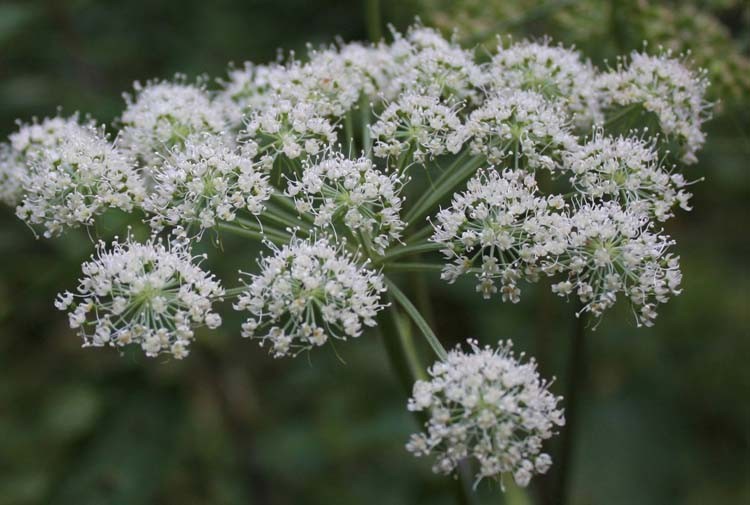
Garden angelica is an impressive plant with green, pinnate leaves and large greenish-white umbels. The stem has a reddish hue and is hollow in many varieties. It is a biennial to triennial crop that can be propagated by seed, is frost-hardy, and is harvested in the autumn of the second year. In 2022, 11.2 hectares were cultivated in Flanders, with an average yield of 15 to 20 tonnes of roots per hectare. Angelica seeds can also be harvested for the extraction of essential oils.
Angelica grows wild in Finland, Sweden, Norway, Denmark, Greenland, the Faroe Islands and Iceland, mainly in the northern regions of these countries. The plant is cultivated on a limited scale in France, Germany and Romania. Garden angelica is also highly attractive to honeybees, resulting in the production of high-quality honey.
Historical use
For centuries, this aromatic plant has been valued for its medicinal and culinary applications. In medieval Iceland and Norway, garden angelica was regarded by the Vikings as a valuable medicinal plant used to treat a wide range of ailments. It was considered so precious that the Norwegian Gulathing Law of the 11th century explicitly prohibited harvesting the plant from another person’s garden, with corporal punishment awaiting those who were caught.
During the late Middle Ages, the cultivation area of angelica expanded significantly in Norway, driven by the belief that its aroma offered protection against the plague and that consuming the plant would be beneficial for those afflicted by the disease.
Active compounds and contemporary applications
Angelica has a sweet, spicy aroma, the intensity of which varies depending on the variety. The plant contains numerous active compounds responsible for this aroma, including various terpenes and coumarins, present in both the above-ground plant parts and the root.
Culinarily, angelica offers a surprisingly wide range of applications. The young, hollow stems are traditionally candied and used in confectionery or as decoration for pastries. In addition, the plant is a classic ingredient in European liqueurs and bitters such as Bénédictine, Chartreuse and gin. Angelica also lends a distinctive herbal note to teas, lemonades and infusions, often with a soothing effect on the stomach.
In modern kitchens, angelica can be used creatively in chutneys, pickles and relishes for fish, meat and vegetable dishes. Its aromatic profile also shines in desserts such as ice cream, sorbet and granita. Angelica is further well suited as a flavouring agent in plant-based milk drinks, such as almond milk, where—used in dried form or as an oil—it adds a natural sweetness.
According to European legislation, the root, leaves, leaf stalks and stems may be used in food products. Other parts of the plant, such as the seeds and flower buds, as well as the essential oil from the root and seeds, are only permitted in food supplements.



